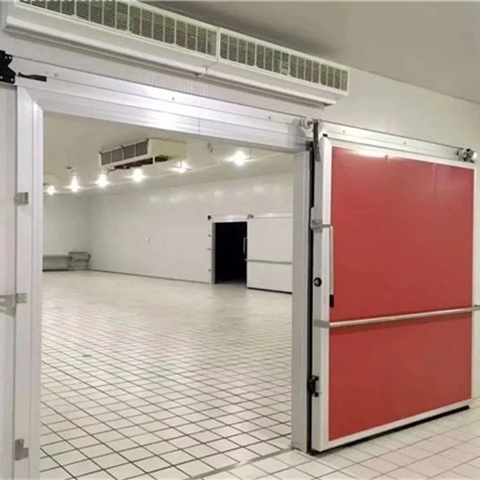
Seafood comes in many varieties. The storage requirements for live, chilled, and frozen seafood differ greatly. Therefore, choosing the right cold storage for seafood is necessary to lock in freshness.
1. Live fish, shrimp, and crabs
We recommend storing live fish, shrimp, and crabs in high-temperature cold storage (0–4℃) for optimal results. This is often in conjunction with low-temperature holding tanks. These tanks maintain temperatures close to seawater temperatures and humidity levels of 90%–95%. When it comes to seafood, proper cold storage is crucial to reduce aquatic metabolism and extend survival time. Gentle ventilation prevents direct drafts that could cause dehydration. Wholesale markets and supermarkets commonly use these tanks for short-term storage. Typically, this storage does not exceed 3 days.

2. Cold storage for freshly caught seafood
We recommend storing freshly caught seafood in pre-cooling cold storage at -1 to 2°C, near-frozen conditions. Importantly, this inhibits bacterial growth and keeps the seafood moist.In this process, the ideal solution is choosing a cold storage method specifically designed for seafood, especially for short-term distribution. It is suitable for short-term distribution and lasts about a week. Dockside processing plants commonly use these cold storage facilities. Here, workers layer seafood with crushed ice to prevent spoilage from compression.
3. For long-term storage and export
Seafood must be stored in a combination of a low-temperature quick-freezing warehouse and a low-temperature freezer. The quick-freezing temperature is below -30°C and rapidly penetrates the food to form tiny ice crystals without damaging the seafood's cells. As a result, this prevents it from becoming watery and dry after thawing, showing how vital it is to select appropriate cold storage for seafood preservation. After quick-freezing, the seafood is transferred to a standard -18°C freezer for long-term storage, lasting 6 to 12 months. This combination of cold storage is commonly used for squid, ribbonfish, shrimp, and shellfish. Generally, it is the mainstream configuration for seafood processing enterprises.

Specialty sashimi-grade seafood requires dedicated ultra-low temperature cold storage (-40℃ to -60℃). Deep-sea sashimi such as tuna and salmon rely on ultra-low temperatures to lock in the oils and flavor. When considering sashimi and export-quality products, the effectiveness of cold storage for seafood in these scenarios cannot be overstated. This also inhibits histamine formation and eliminates food safety risks.
Cold storage selection also requires appropriate design. Seafood cold storage needs waterproof and corrosion-resistant flooring, a defrosting and drainage system, and separate storage areas for raw and cooked foods. In addition, frozen storage should minimize frequent door openings to prevent temperature fluctuations. Small businesses selling for short periods can choose fresh-keeping storage. On the other hand, processing plants storing bulk goods should use a combination of quick-freezing and regular frozen storage. High-end sashimi ingredients require separate ultra-low temperature cold storage. Therefore, the type of cold storage for seafood chosen must align with actual needs to balance preservation effectiveness and operating costs.
Welcome to inquiry about products related to walk in freezer, condenser, and panels.
You also can check our Tiktok, Youtube, Instagram channel for more video show.