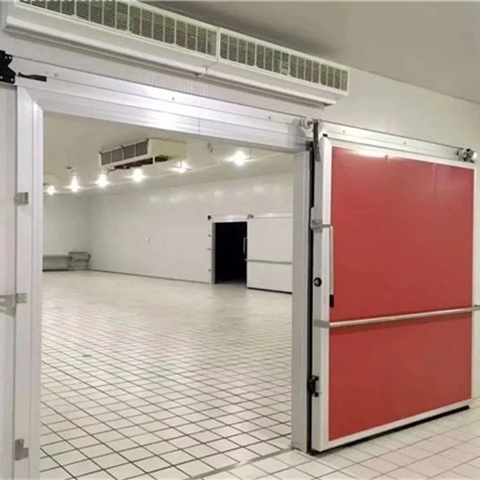
What are the basic requirements for installing a cold storage refrigeration unit? Every installation has its key points, and installing a cold storage refrigeration unit is no exception. Before installing refrigeration units, it's essential to understand the specific requirements involved.
What are the specific requirements for refrigeration unit installation?
1. Temperature control probe installation
Insert both the temperature display probe and the temperature control probe together into the evaporator's return air vent inside the cold room, and suspend them in the air. Also, fix the defrosting temperature control to the ceiling. Insert the probe through the other hole into the evaporator's return air vent inside the cold room, positioning it within the fins (away from the electric heating tube). Fix both the temperature control and the defrosting temperature control in a corner behind the evaporator inside the cold room, and seal all connections. Therefore, careful probe placement is a step not to overlook when thinking about refrigeration unit installation for optimal performance.
2. Refrigeration system connection
Since the factory pressure-tests and seals the main unit's condenser and evaporator, you should find pressure when unpacking it. Check for leaks. The factory must apply dust-proof measures to both ends of the copper pipes before shipment. During construction, always keep the ends sealed to prevent water and dust ingress. Technicians connect the condenser, main unit, evaporator, and copper pipes through welding, ensuring the joints are both secure and aesthetically pleasing. In essence, tight connections are crucial when handling the installation of refrigeration units to prevent leaks.
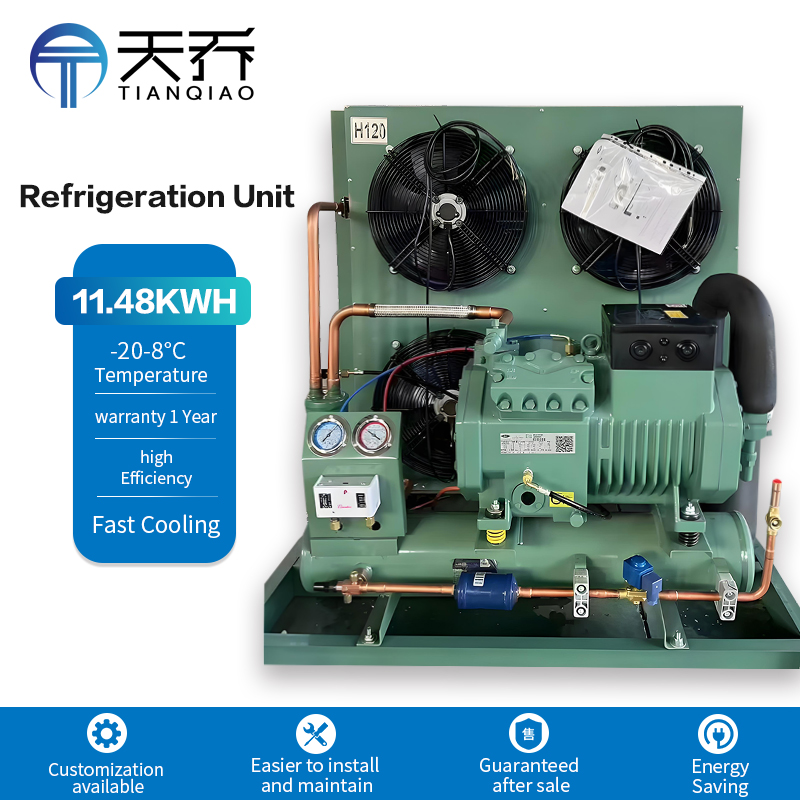
3. Do not install the balancing window in a conspicuous location or on the air outlet panel. The opening should be 200mm down from the top of the panel. Also, during refrigeration unit installation, handle the balancing window placement with care to avoid performance issues.
4. Copper pipe installation
Cover all copper pipes separately with insulation tubes, then bundle them together with the wires in the same direction using air conditioning cable ties. Route them as straight as possible and fix them in sections. Seal the joints between insulation tubes with electrical tape. Properly planning installation steps for a refrigeration unit and its copper piping ensures insulation and longevity.
5. Wiring: All wires, in addition to being secured with air conditioning cable ties, must be protected by corrugated flexible tubing or cable trays. Keep the temperature display wires away from other electrical wires as much as possible. Good wiring not only streamlines refrigeration unit installation but also improves safety.
6. Radiator installation
The radiator should be installed as close to the main unit as possible, preferably slightly above the main unit. The radiator installation location should have a good heat dissipation environment. The air intake should not face the air outlet of other equipment, especially those emitting oily gases. Do not let the air outlet short-circuit or direct airflow toward other windows (especially residential ones) or equipment. It should be at least 2 meters above the ground and installed horizontally and securely. When you take care with refrigeration unit installation, choosing the right position for the radiator is vital for system efficiency.
7. Electrical wiring performance and configuration
Ensure the wire diameter meets requirements, make all connections secure, use protective conduits where necessary, and connect all wiring correctly. The wires entering the evaporator junction box must be sealed with silicone sealant. For lighting circuits exceeding 36V, a ground wire is required. The main electrical cabinet requires a three-phase five-wire system with reliable grounding. Proper planning is advisable before starting your refrigeration unit installation to ensure compliance with all requirements.
8. Cold room panel sealing
All components penetrating the cold room panels must have their gaps sealed with sealant. Another important detail during installation of a refrigeration unit is sealing against unwanted air exchange.
Welcome to inquiry about products related to walk in freezer, condensing unit, and panels.
You also can check our Tiktok, Youtube, Instagram channel for more video show.